REMOTE WORK
STATISTICS 2025

THE FUTURE OF REMOTE WORK
REMOTEWORK TRENDS & INSIGHTS
For the past five years, remote work has been one of the major trends in modern workplaces. Since COVID-19 social distancing guidelines forced workers out of traditional offices, many companies worldwide have never fully incorporated the workforce back into the office.
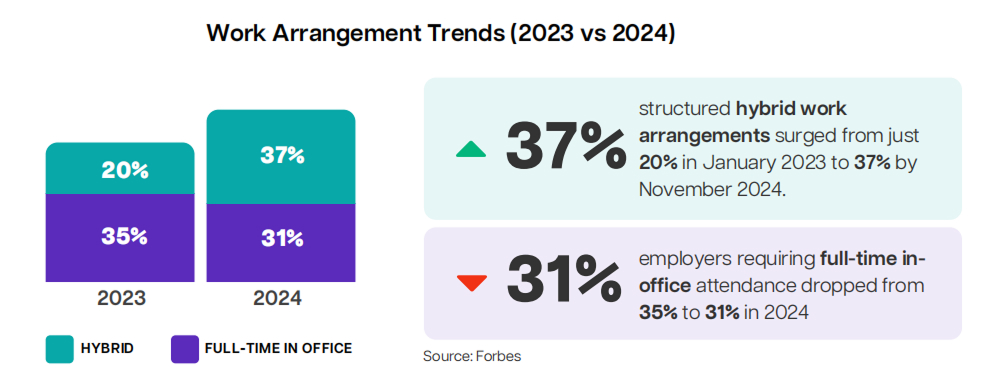
While some large corporations are mandating a return to the office, recent trends indicate that employers, especially startups and midsize companies are increasingly adopting remote work or at least considering hybrid models
Remote work is a dominant trend in the modern workplace that forward-looking employers cannot afford to overlook. It is essential human resources departments quickly align their practices and workplace models to accommodate this new trend. This report analyzes the global remote work landscape and presents top trends likely to shape the sector. The report also assesses issues that may affect remote work in 2025 and discusses the state of remote work in the Philippines.
KEY STATISTICS ON
REMOTE WORK
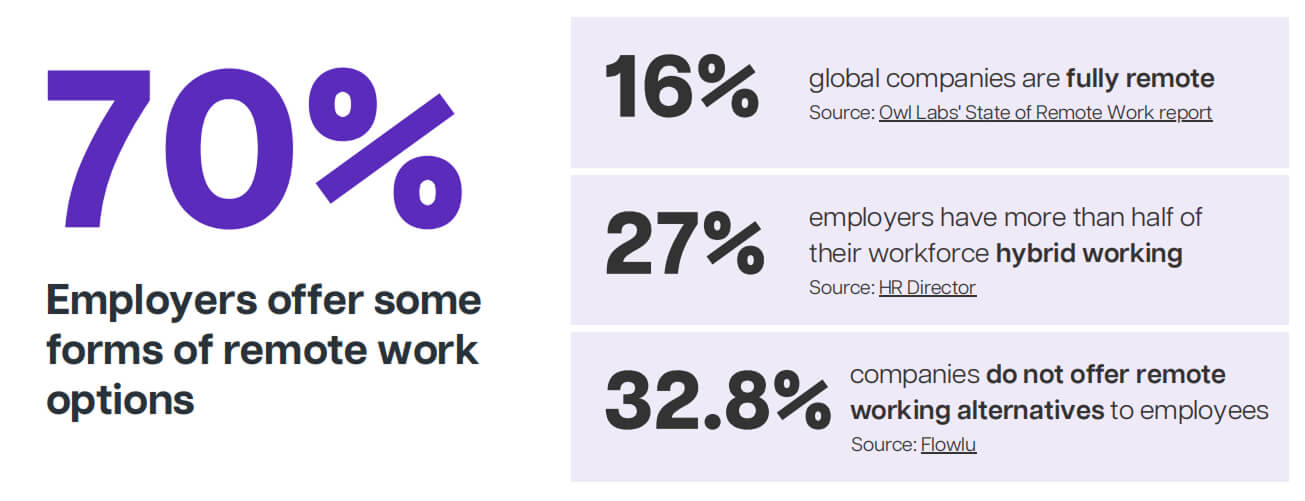
Remote work has been on the rise for the past few years. This trend is expected to extend into this year, with some experts insinuating that virtual working environments may soon replace the traditional workplace office. Here are some of the remote working statistics human resource professionals should consider this year
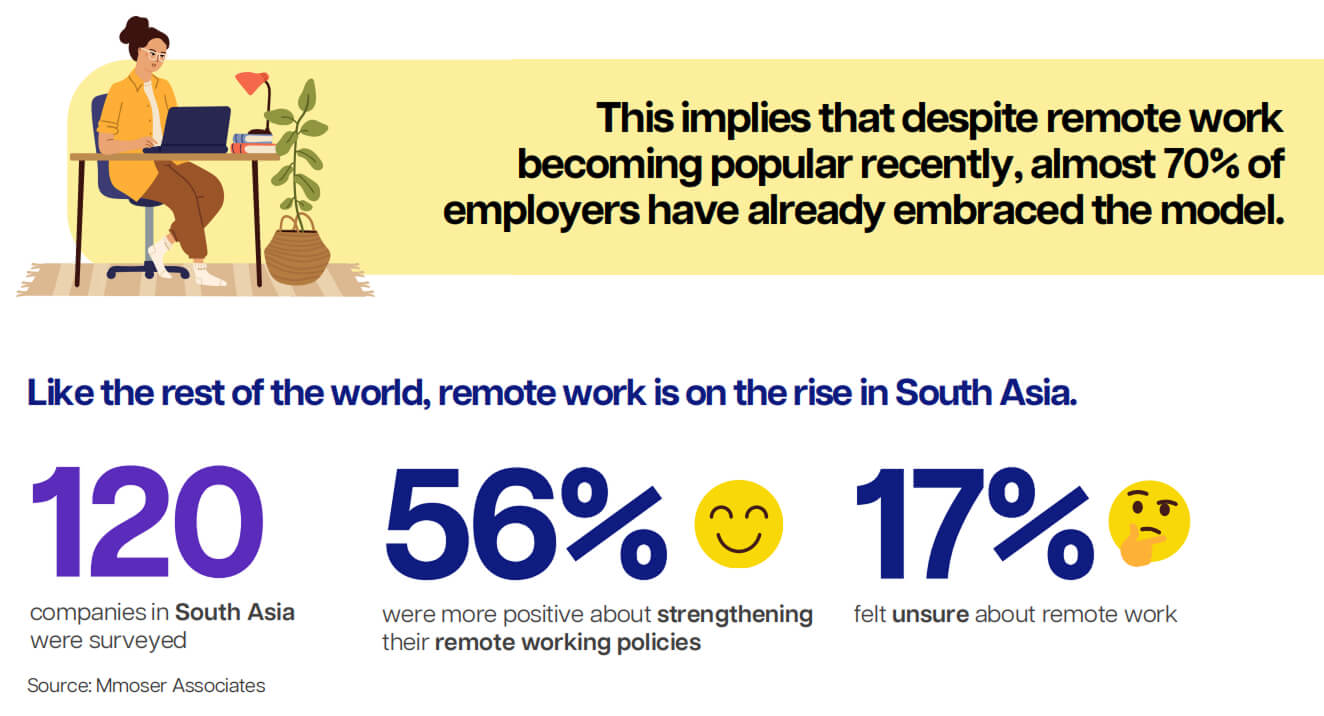
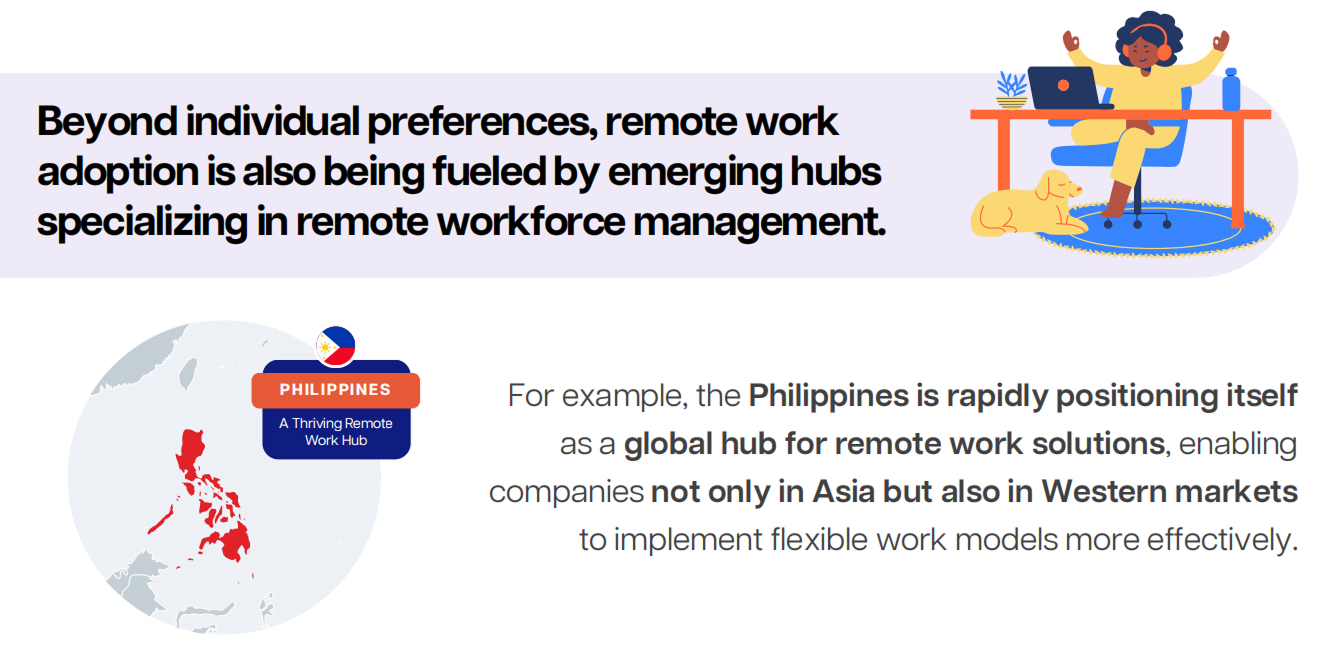
In the Philippines, organizations have been quickly reorganizing their working environments to leverage the benefits remote working offers.
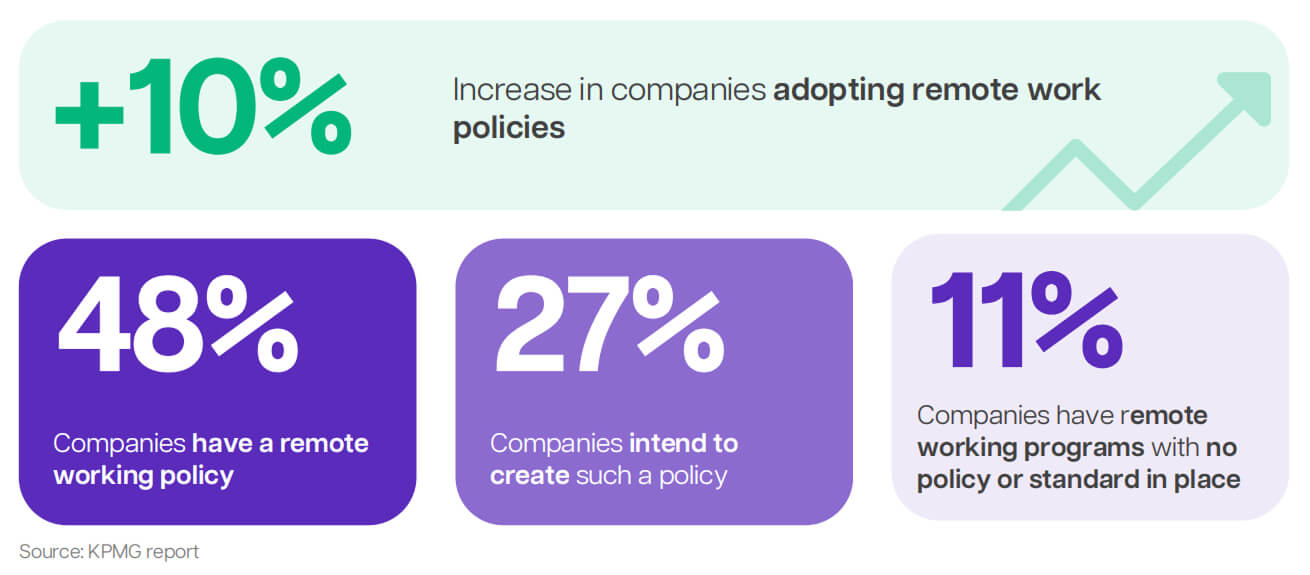
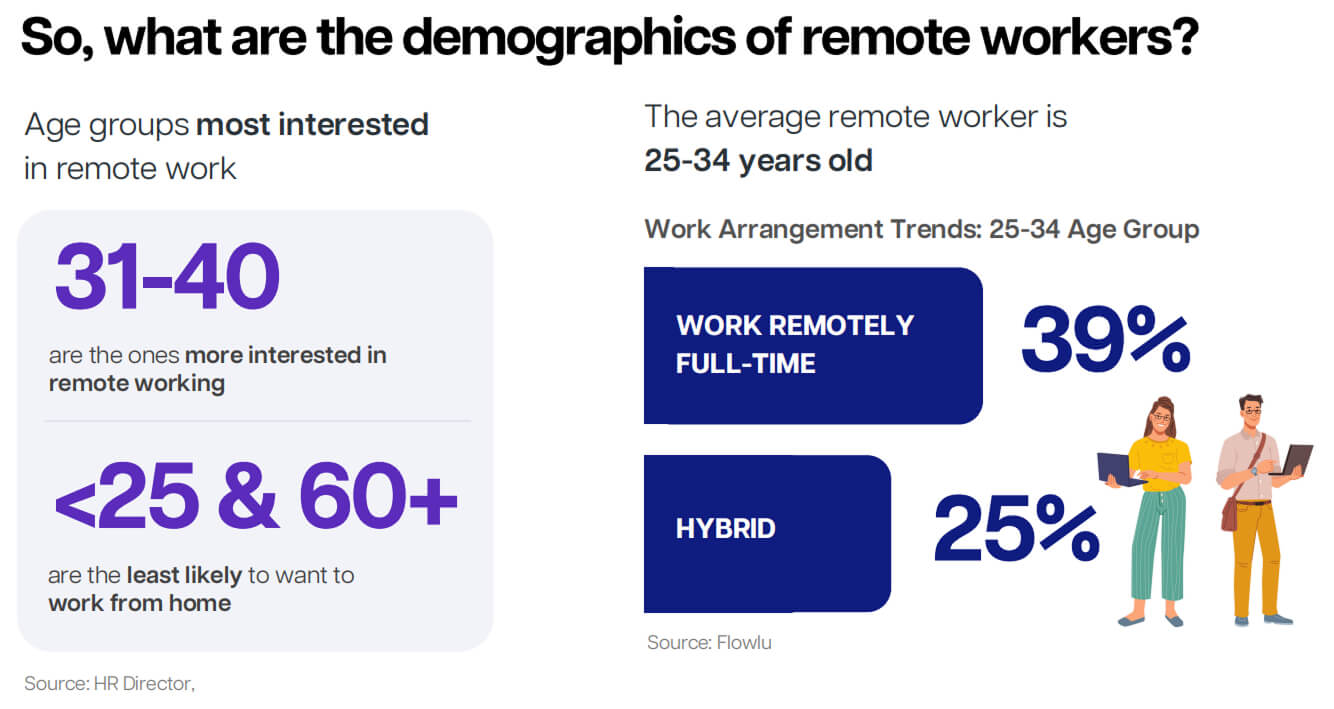

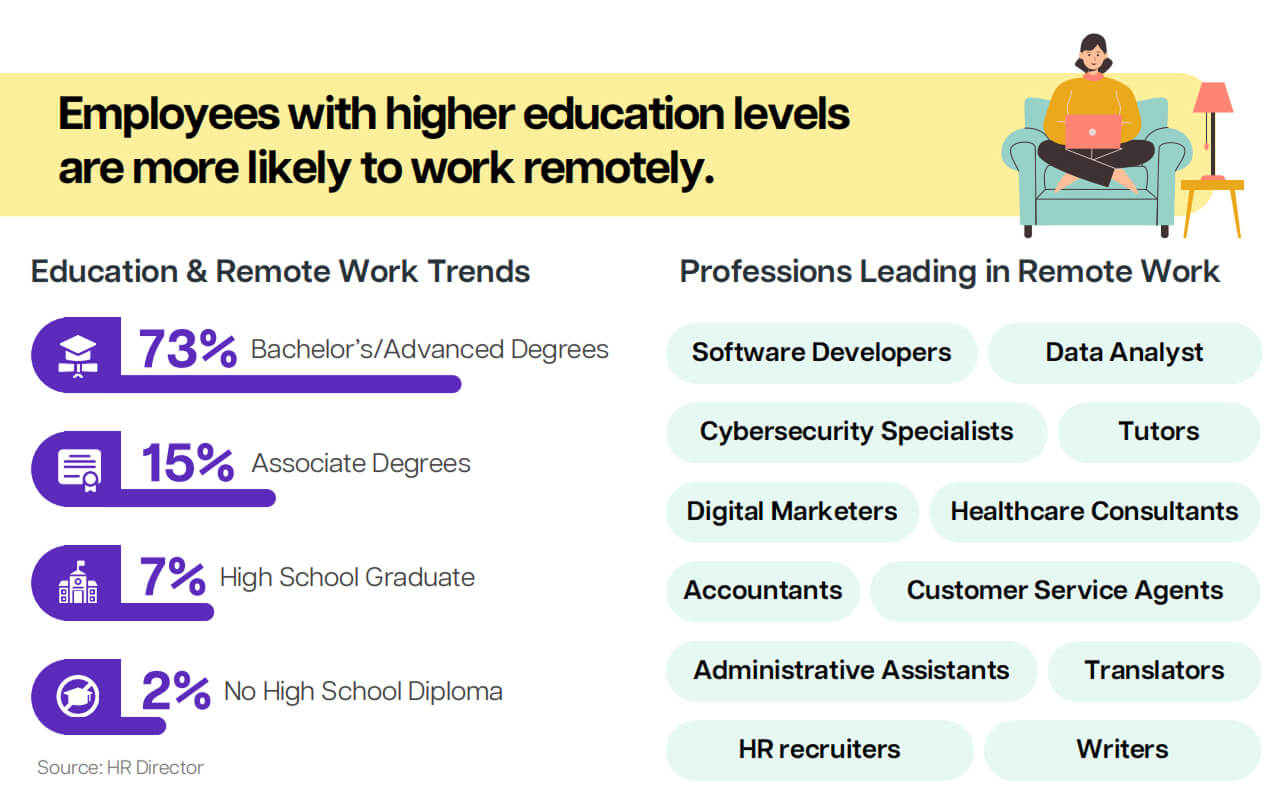
GLOBAL REMOTE WORK LANDSCAPE
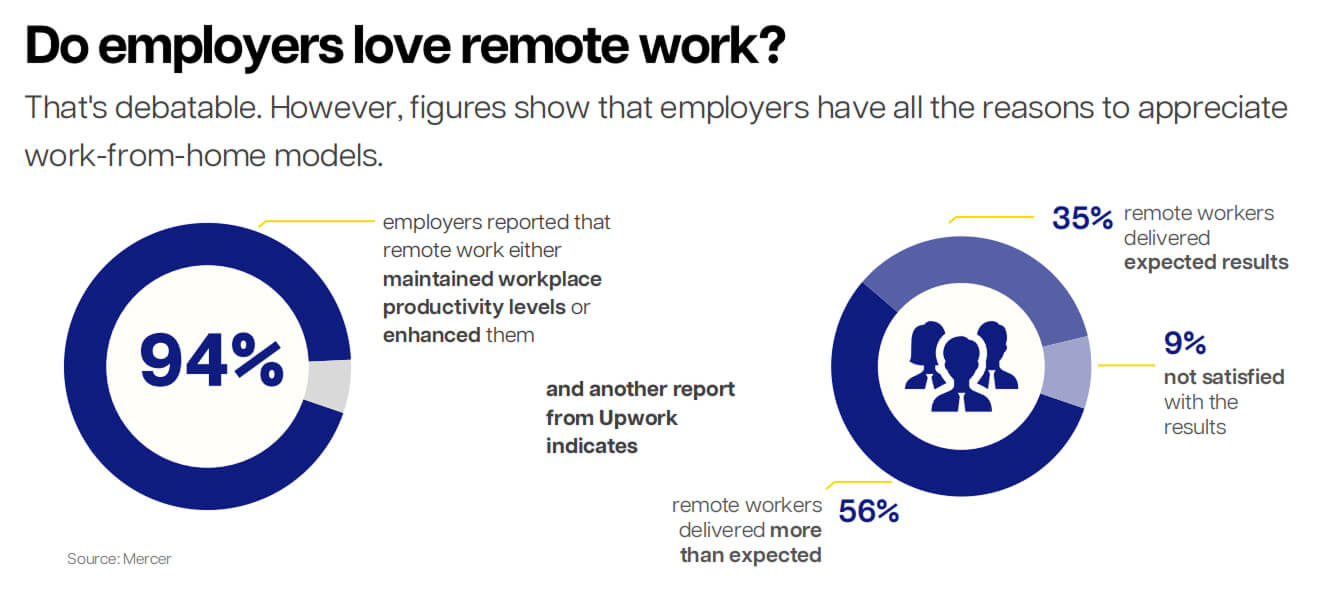
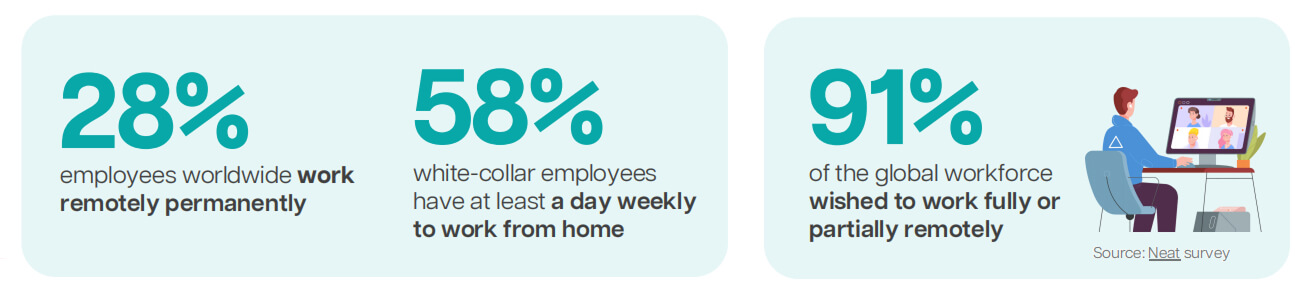
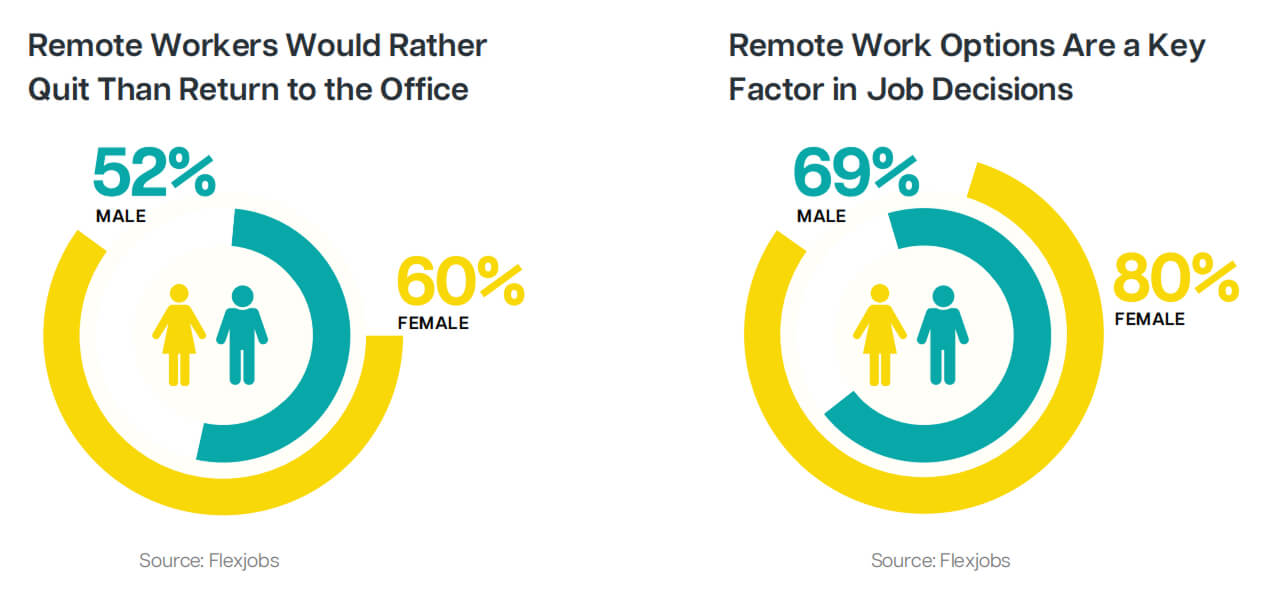
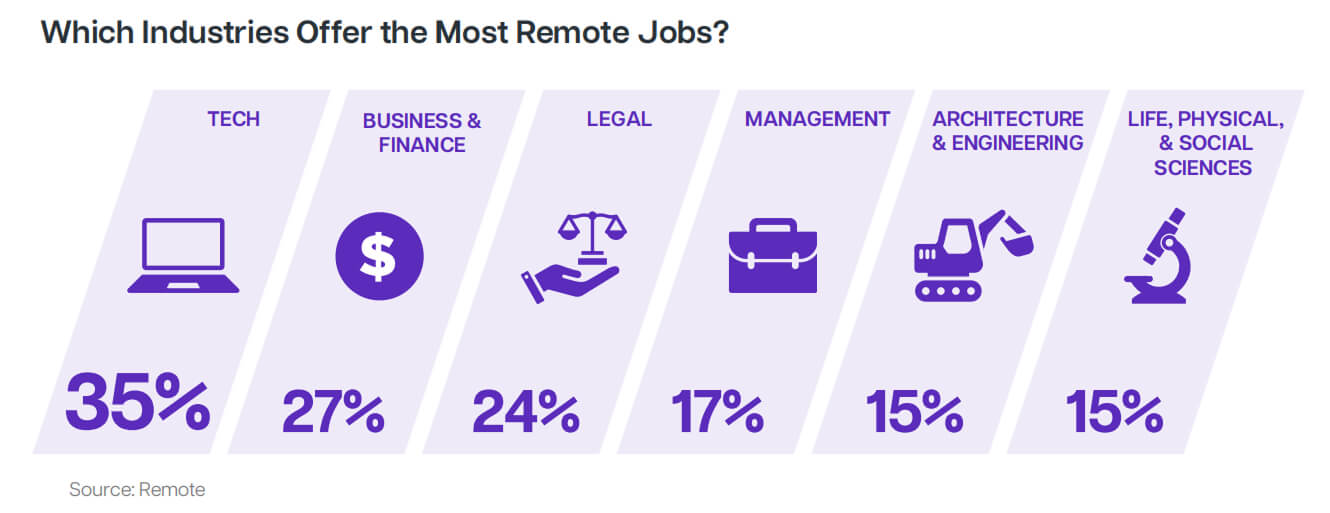
Though it is difficult to accurately estimate the size of the global workforce working remotely, various projections will give you insight of how they voice their opinions. These insights demonstrate the significance of remote work in the modern workplace.
EMERGING TRENDS SHAPING
REMOTE WORK
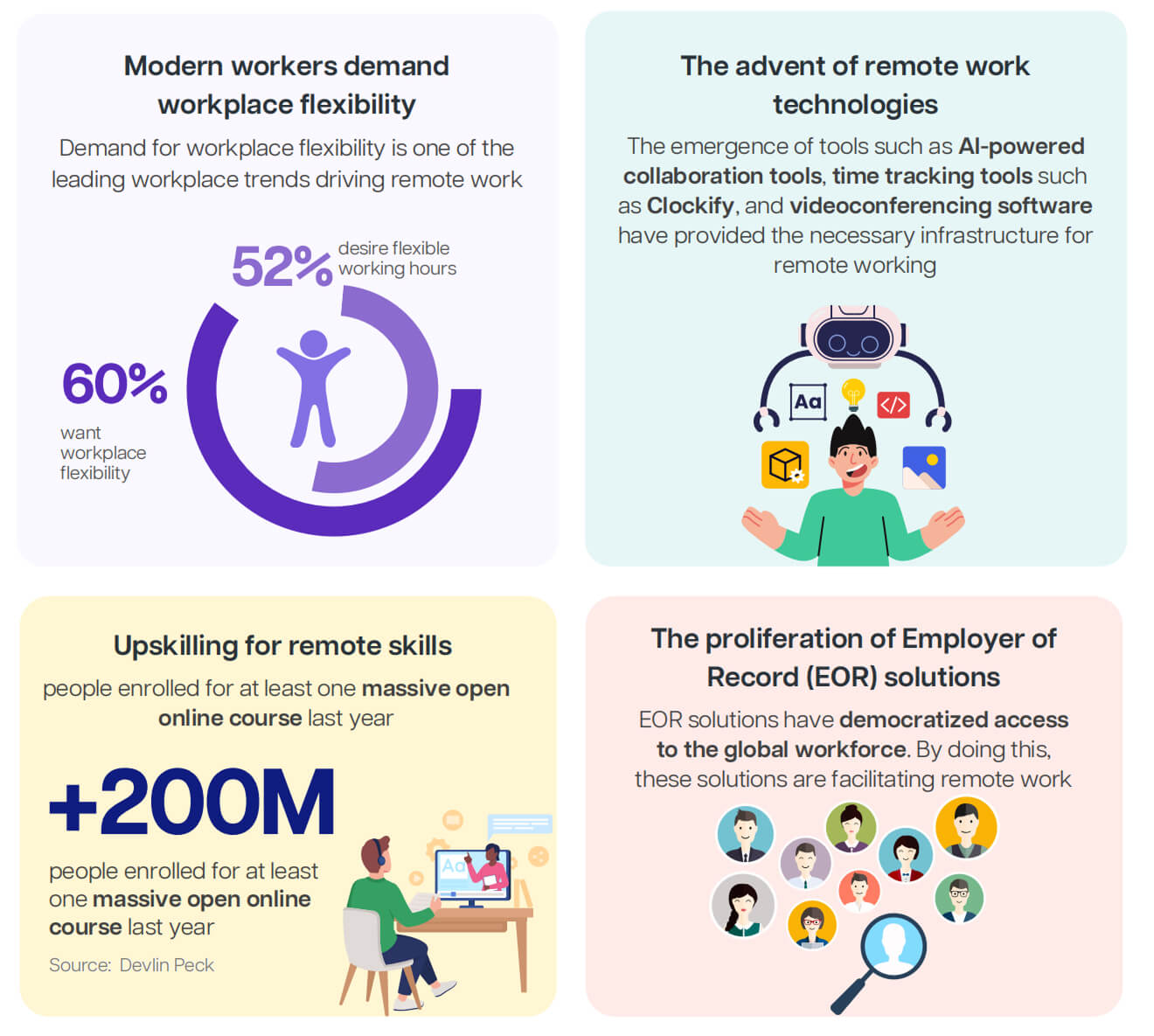
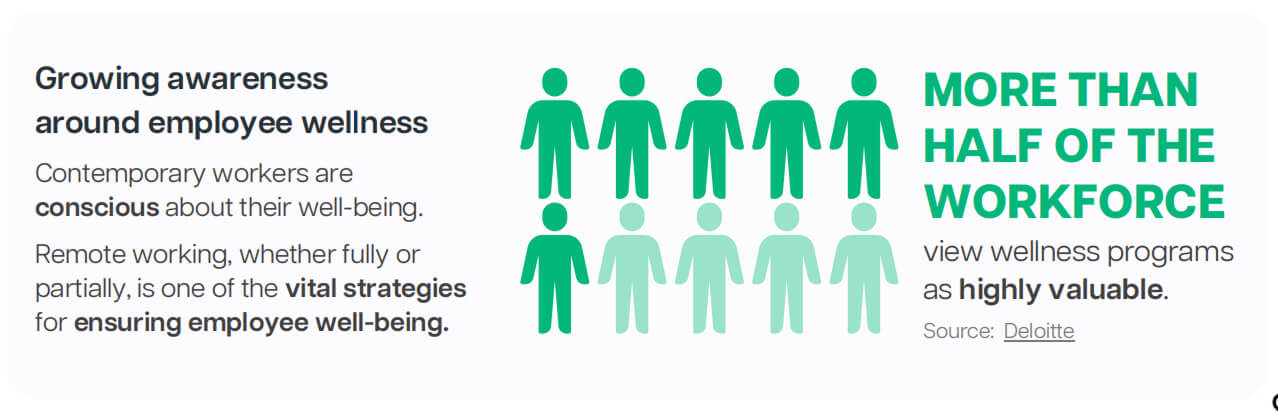
Remote working is a relatively new practice in the workplace. Although its popularity soared as a result of the COVID-19 pandemic, the model still persists almost five years later, and statistics indicate that its assimilation is even growing. This growth is attributable to various trends shaping the sector. These trends include;
BENEFITS AND CHALLENGES OF
REMOTE WORKING IN 2025
Challenges of Remote Work
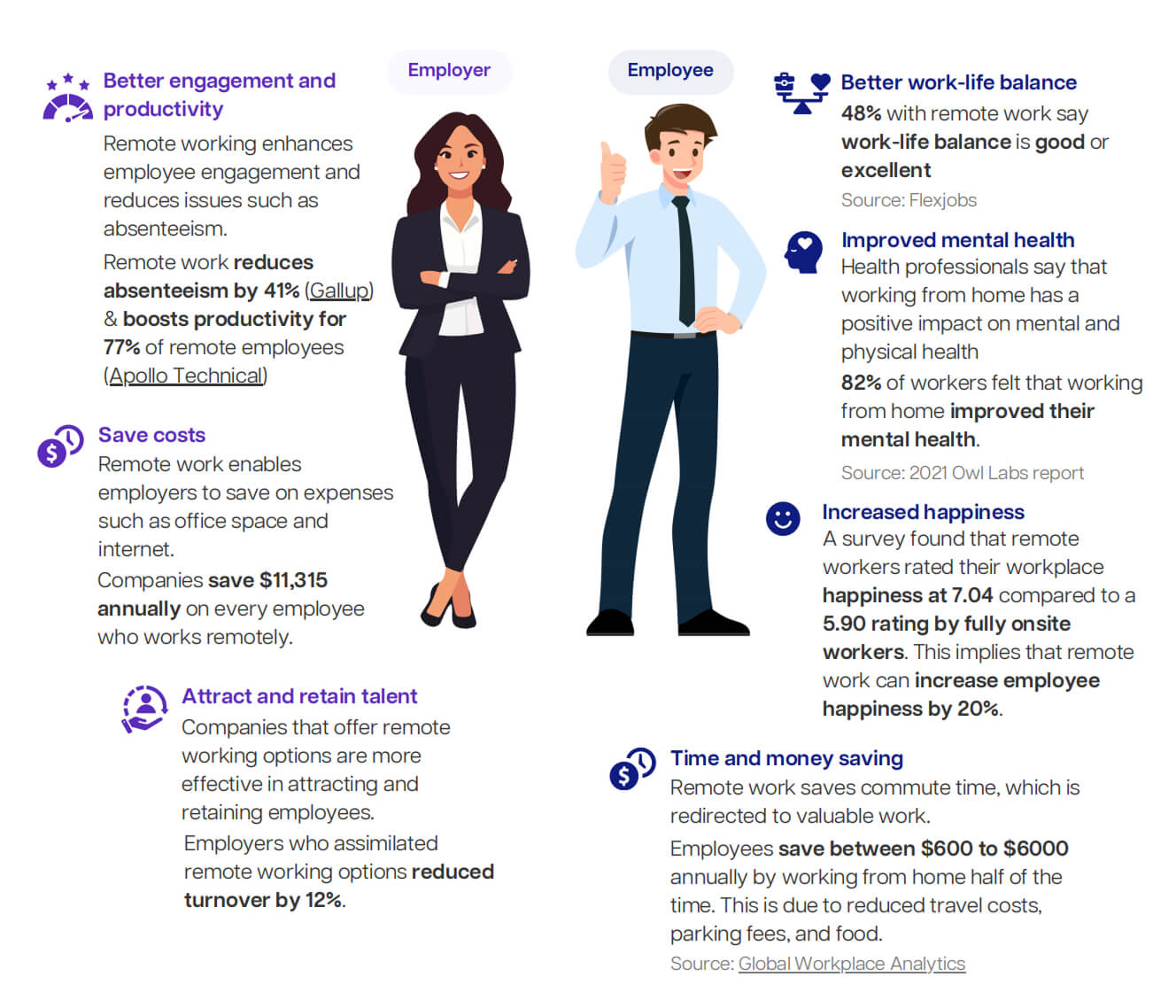
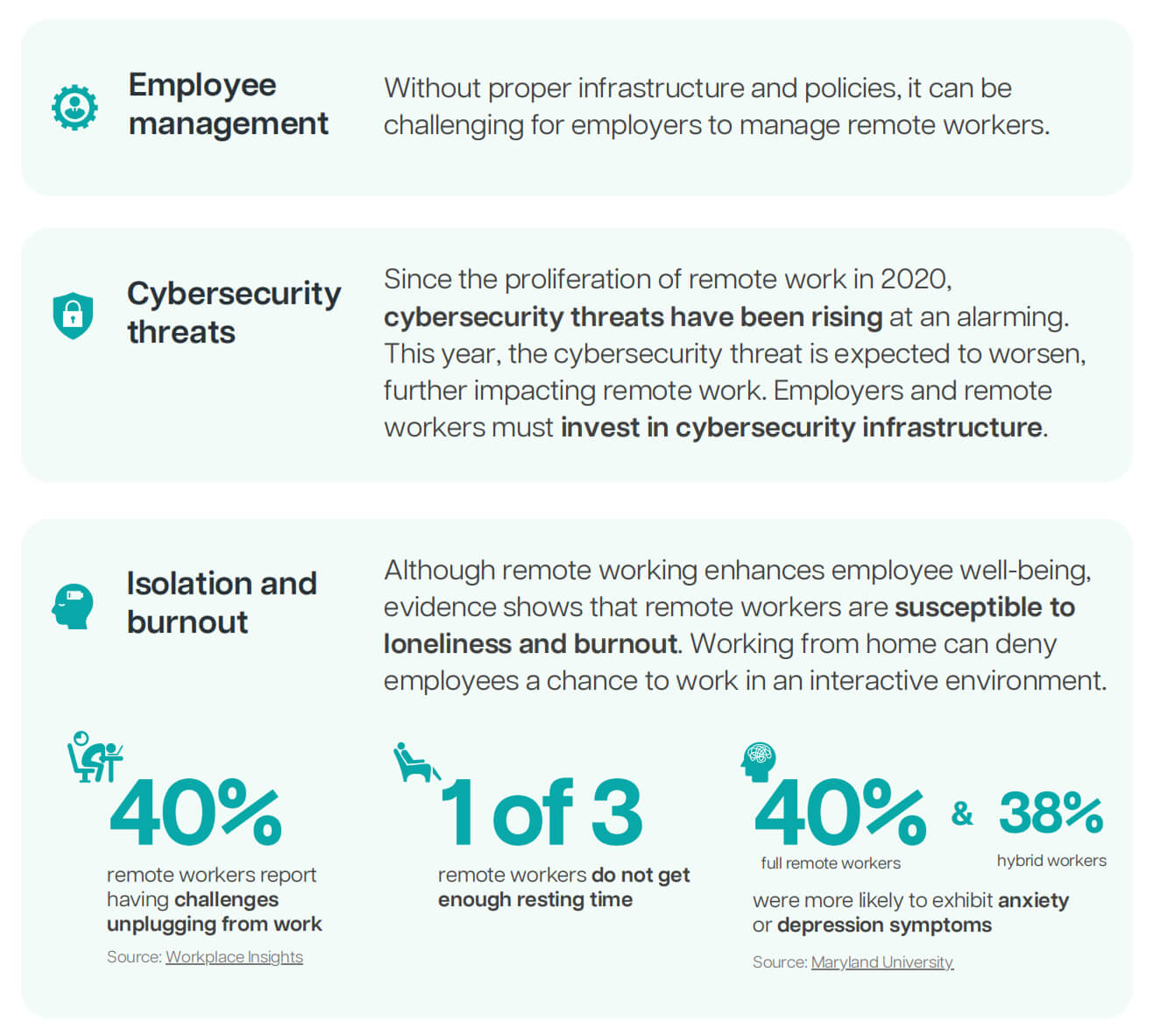
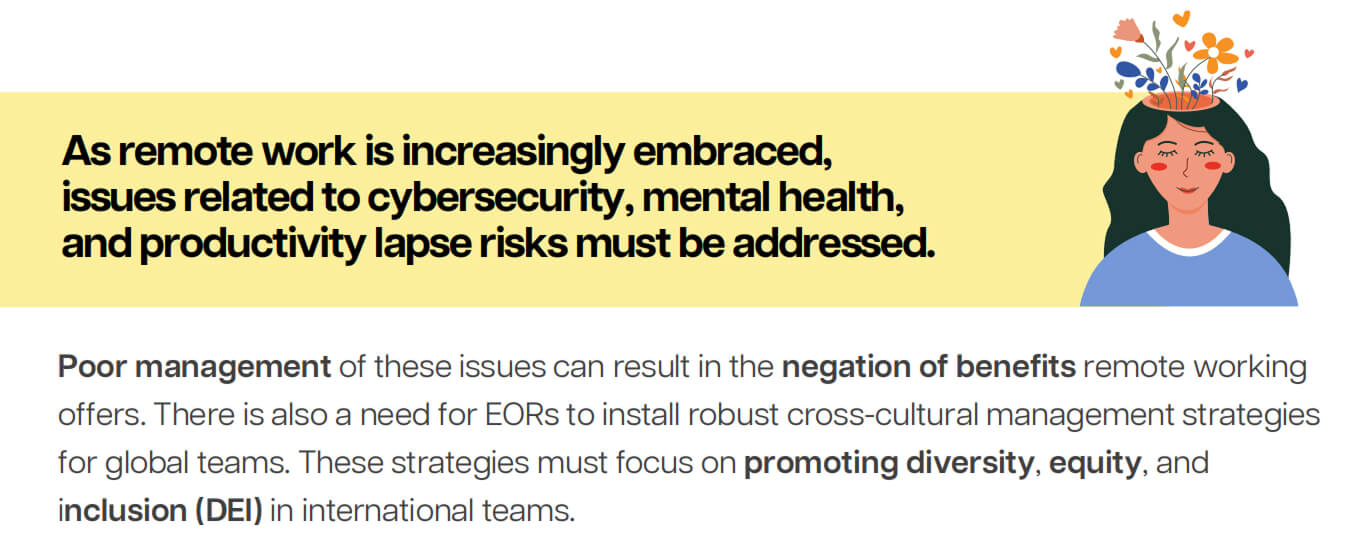
Although remote working models have many benefits for employers and employees, these models are also vulnerable to various challenges. Some of the key issues related to remote working include:
REMOTE WORK IN THE PHILIPPINES
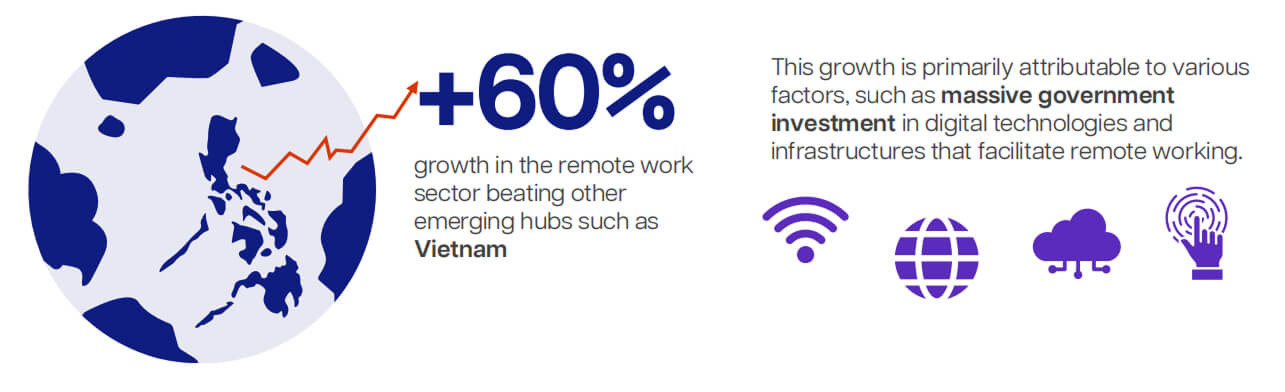
For the past two years, the Philippines has been ranked among the top 10 fastest growing remote hubs globally.

REGIONAL LOOK AT WORK TRENDS
AND EOR ADOPTION
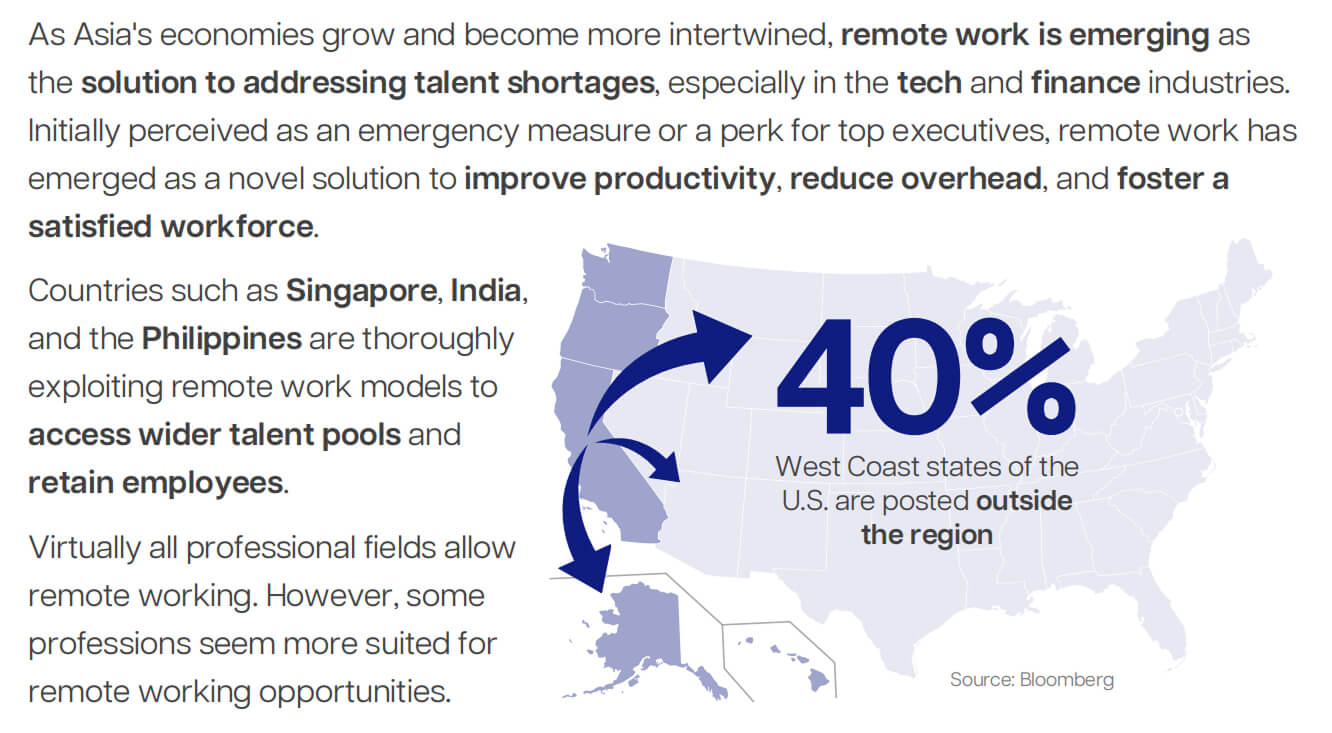
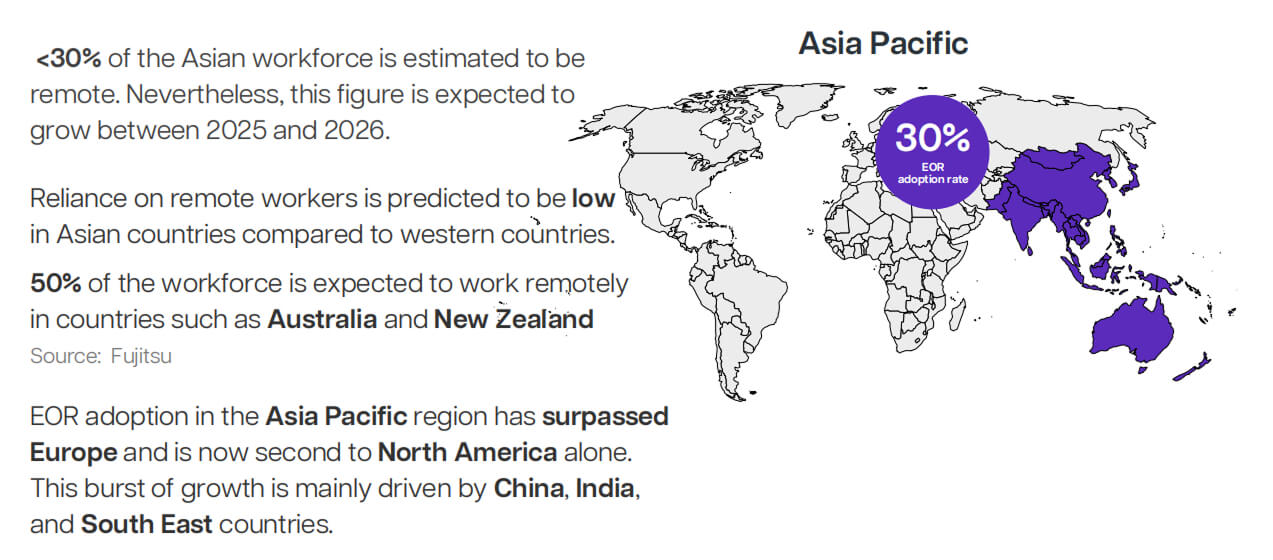
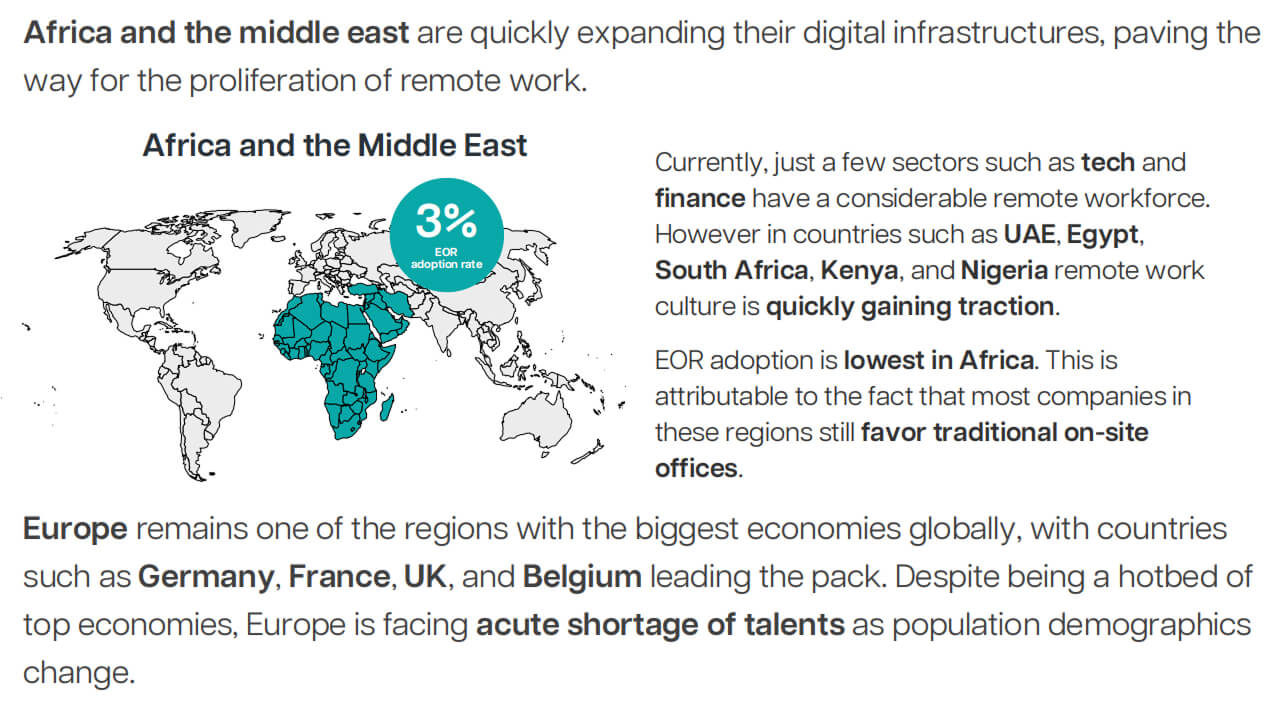
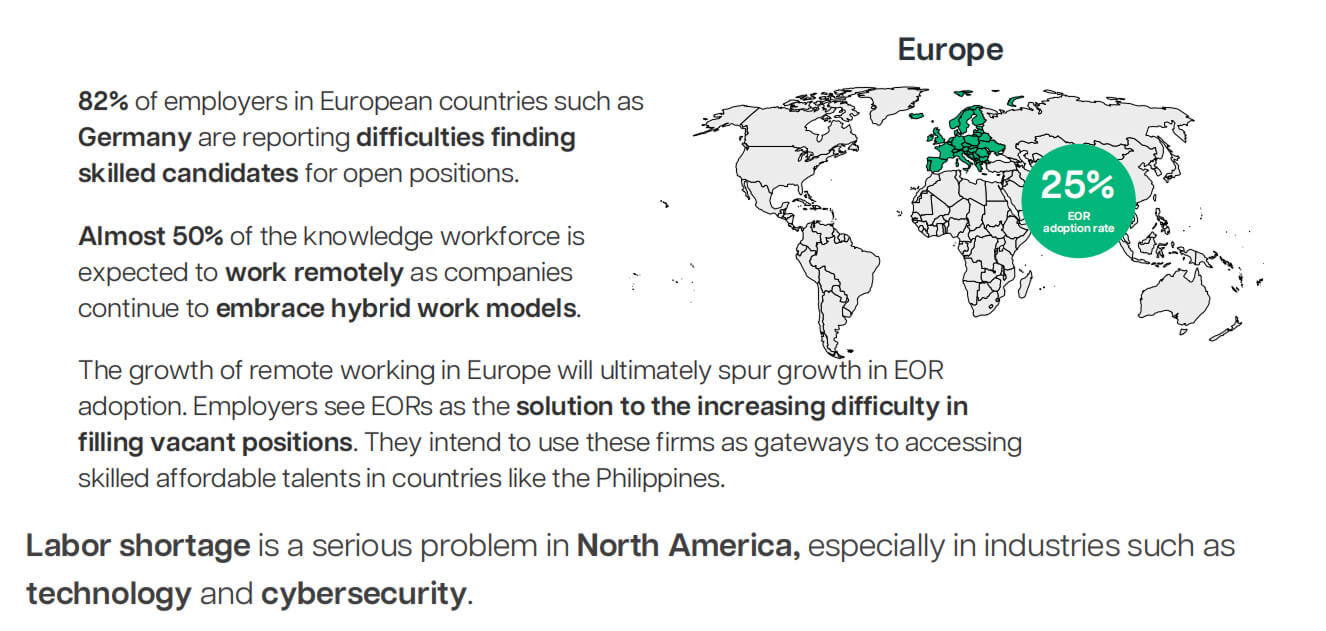
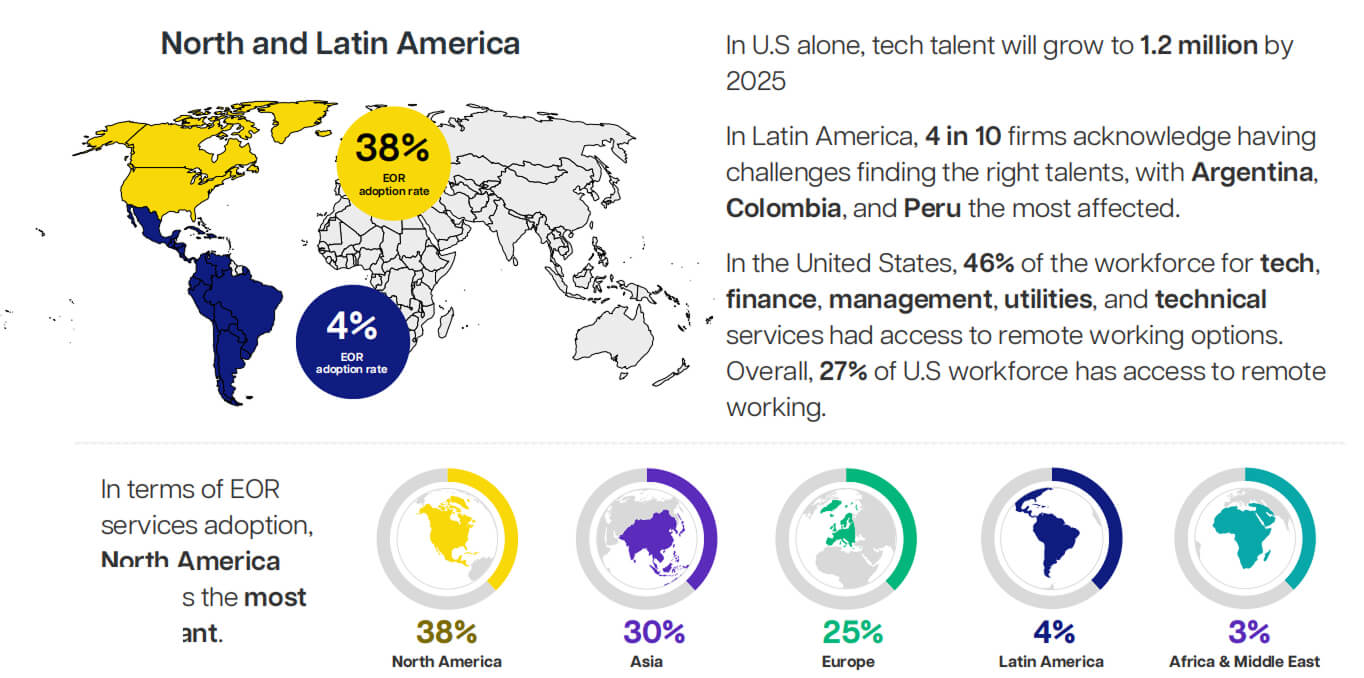
Asian economies are growing rapidly, creating talent shortages in critical sectors such as technology and finance. Asian companies in these sectors are expected to leverage remote workers to offset talent deficits in these sectors.
How are EORs reshaping regionalhiring strategies?
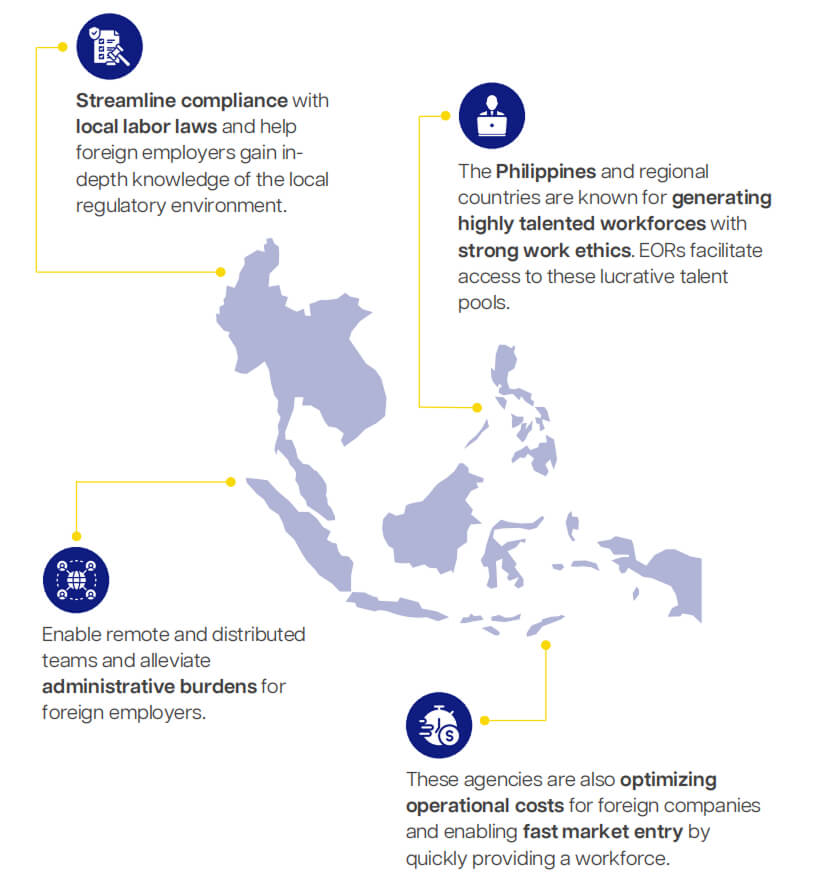
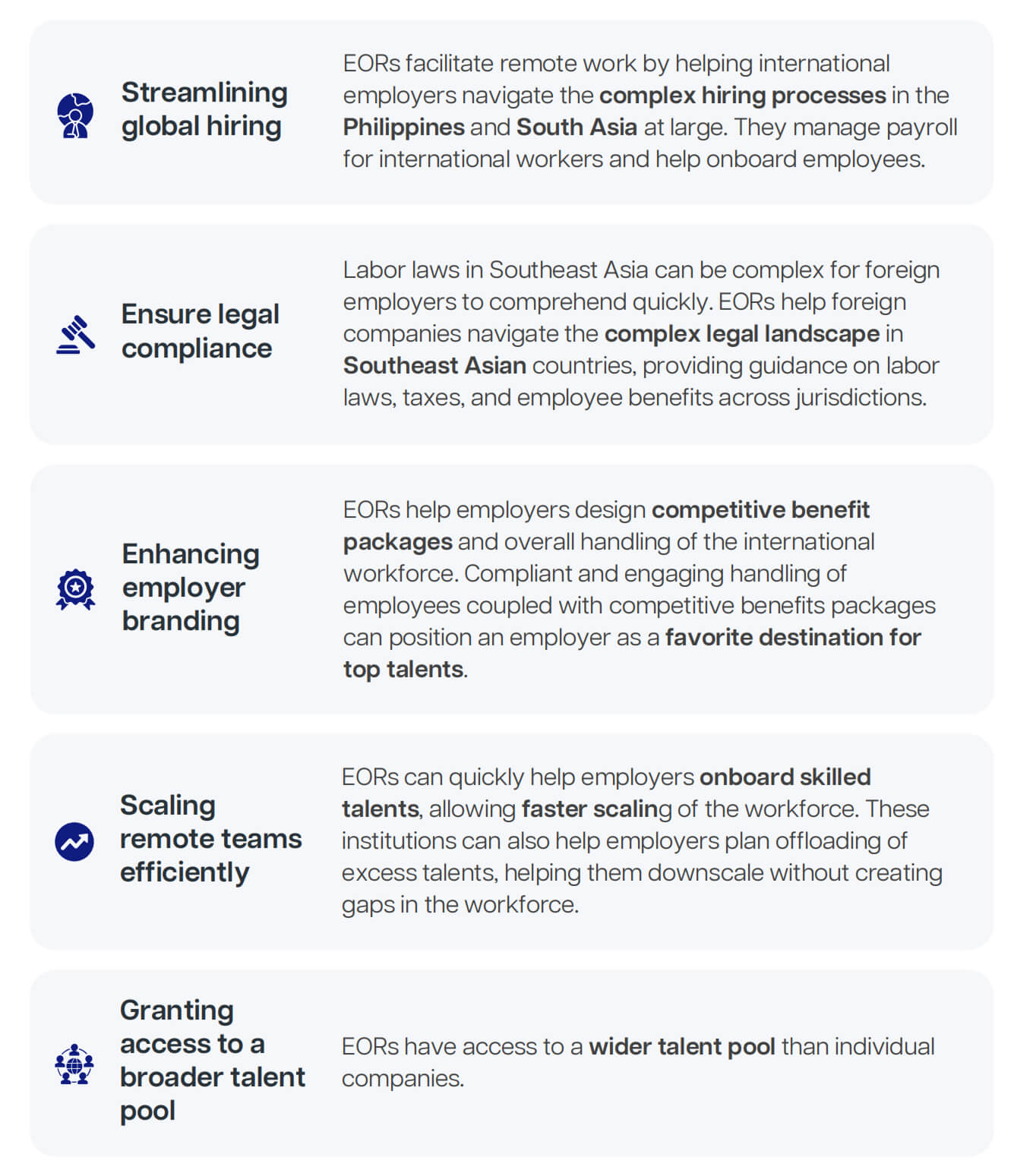
The advent of EORs has paved the way for remodeling hiring in the Philippines and South Asia in various ways:
THE FUTURE OF REMOTE WORK
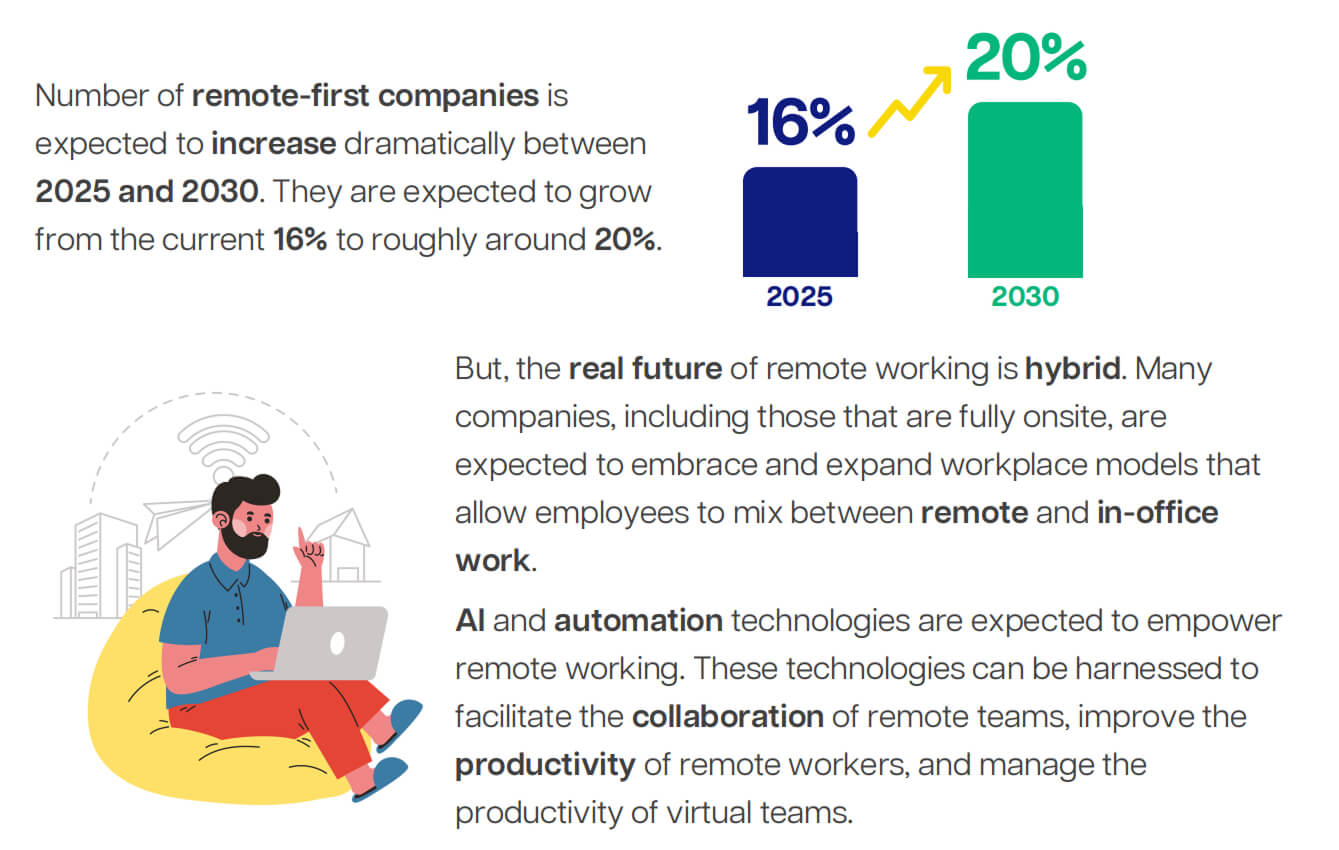
The future of remote work is certain. Although many employers are still treating remote work as an experiment, the reality is that remote work is not going anywhere, and in fact, it is the future of work.
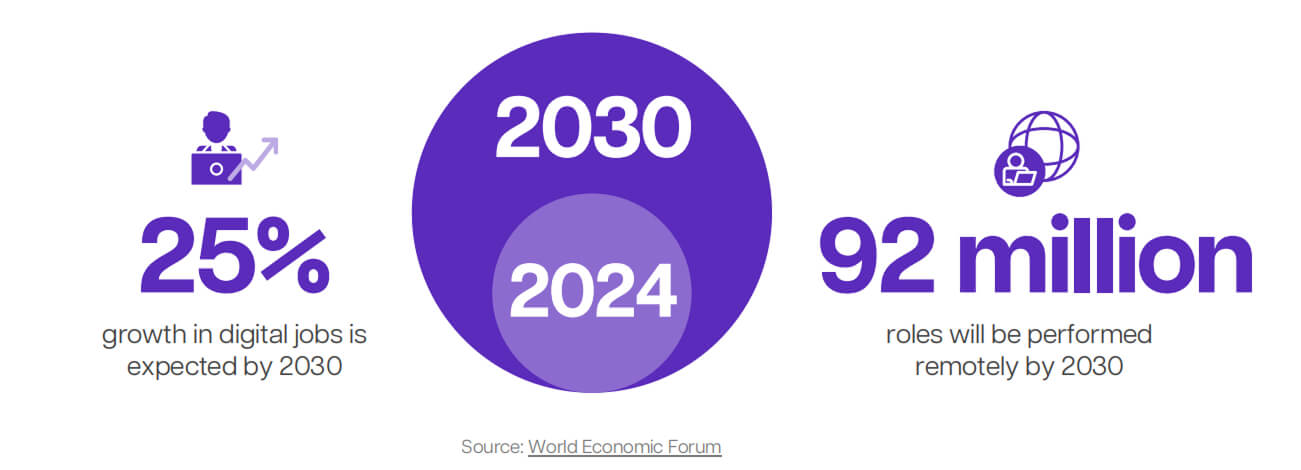
This growth will be driven by the indoctrination of remote working in many organizations' workplace cultures and advances in technologies that support teleworking.
THE ROLE OF EORs IN ENABLING
REMOTE WORK
Employers of Record Solutions are driving remote work in the Philippines and several countries within the locality. These services achieve this by playing various roles in the sector. Some of the core roles performed by EORs include:
WHY REMOTIFY?
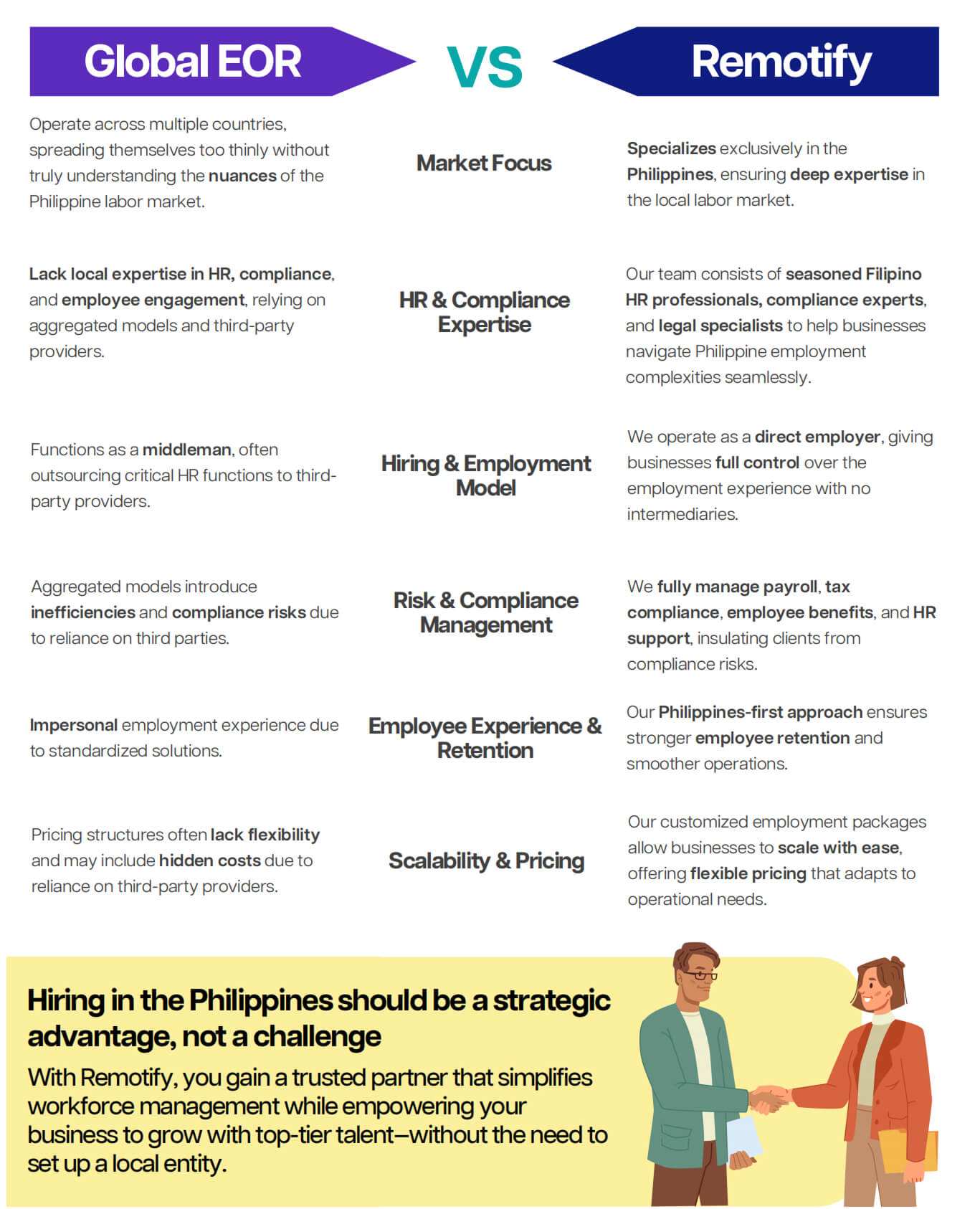
While Employer of Record (EOR) services streamline hiring remote workers in the Philippines, most traditional EORs operate across multiple countries, spreading themselves too thinly without truly understanding the nuances of the Philippine labor market.
OUR SERVICES
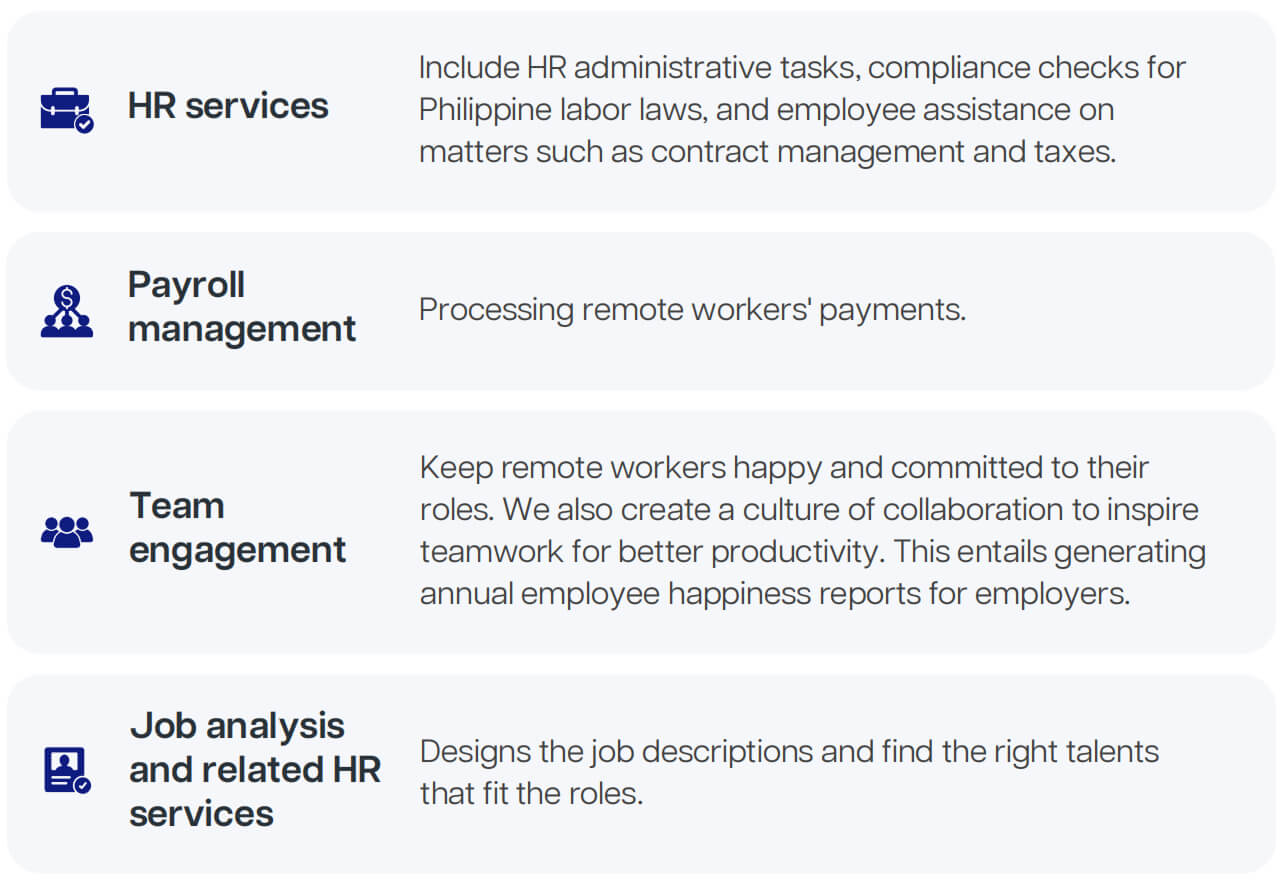
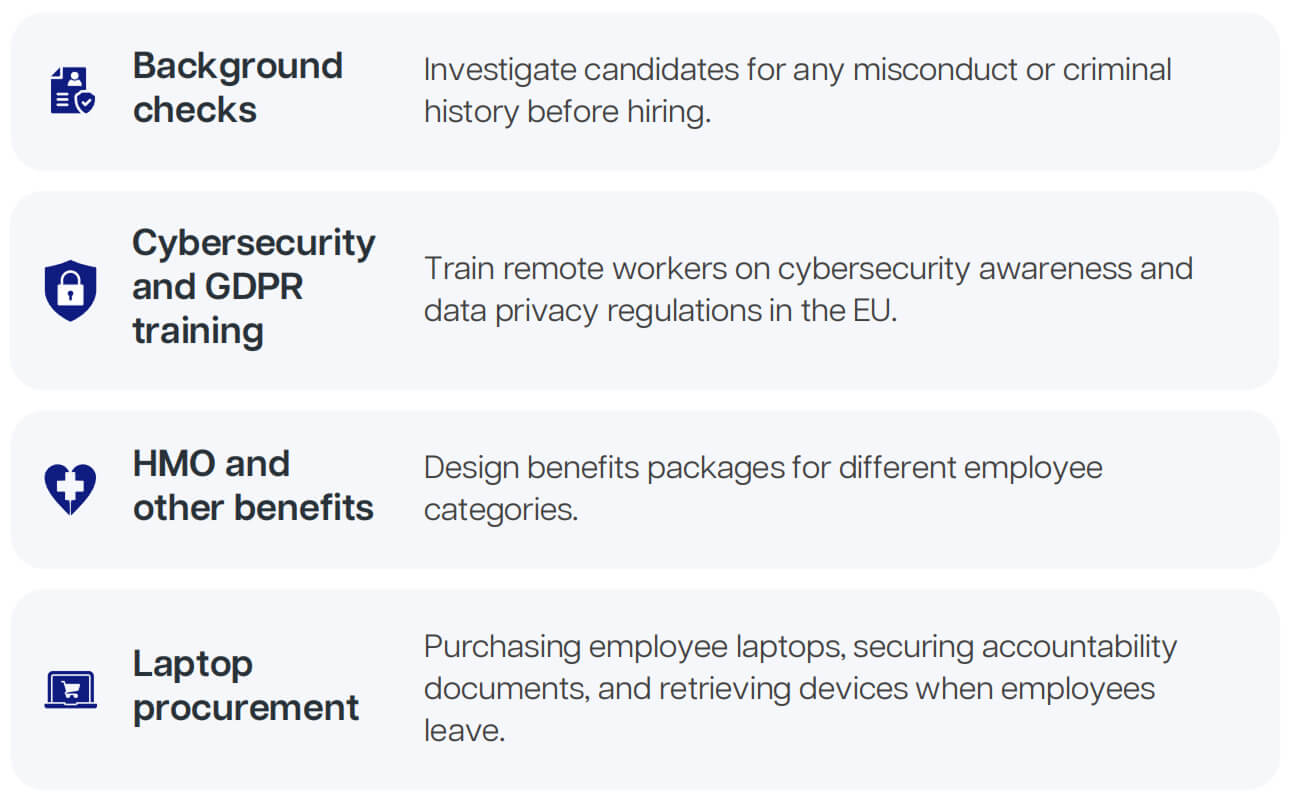
Our objective as an EOR firm is to unlock the true potential of remote work by giving employers access to Filipino talent without setting up local offices, and helping them streamline the management of international teams. Besides serving the interests of employers, Remotify is committed to ensuring the interests of employees by guaranteeing job security and negotiating benefits packages for them.

HOW WE SUPPORT YOUR REMOTE
WORK JOURNEY
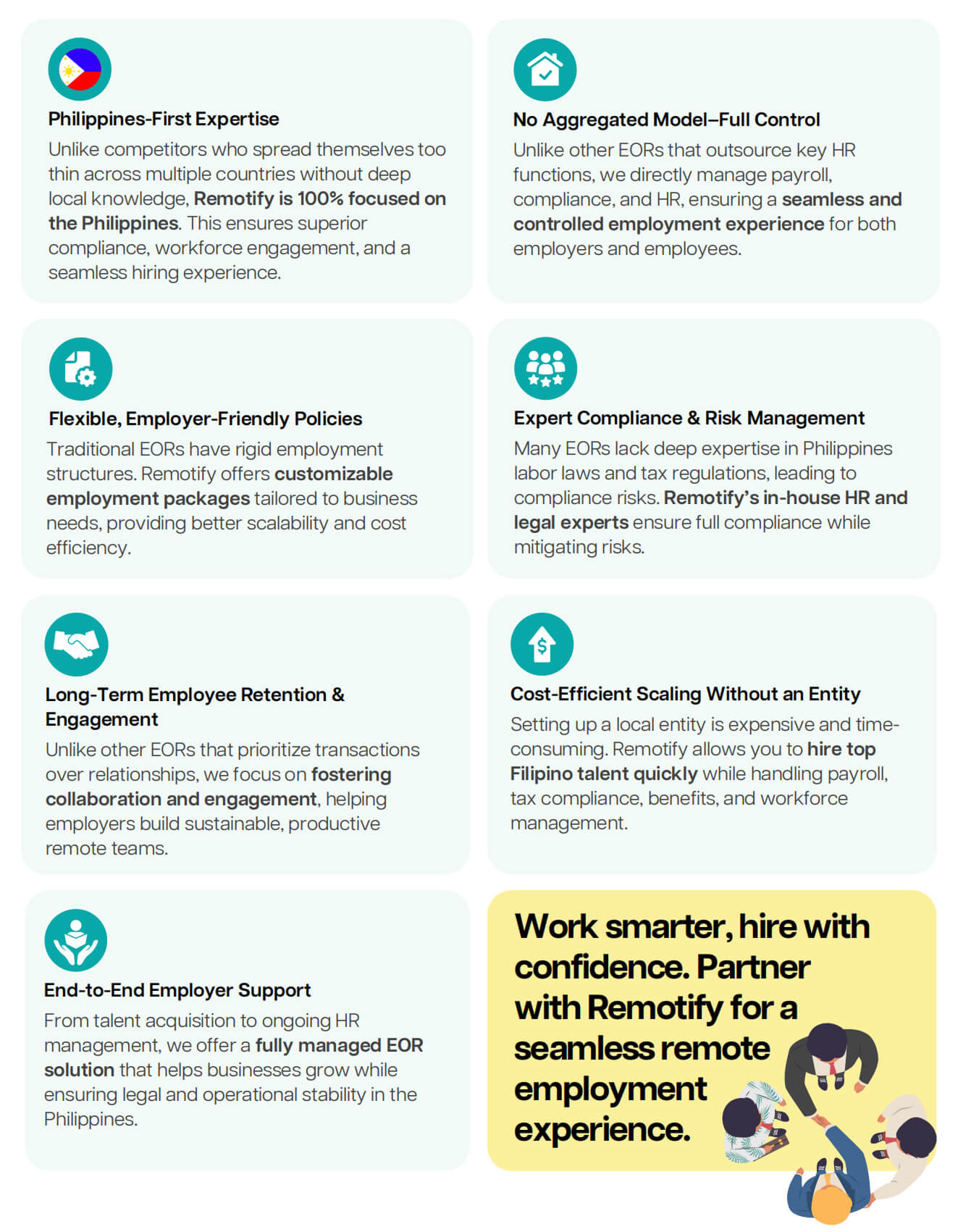
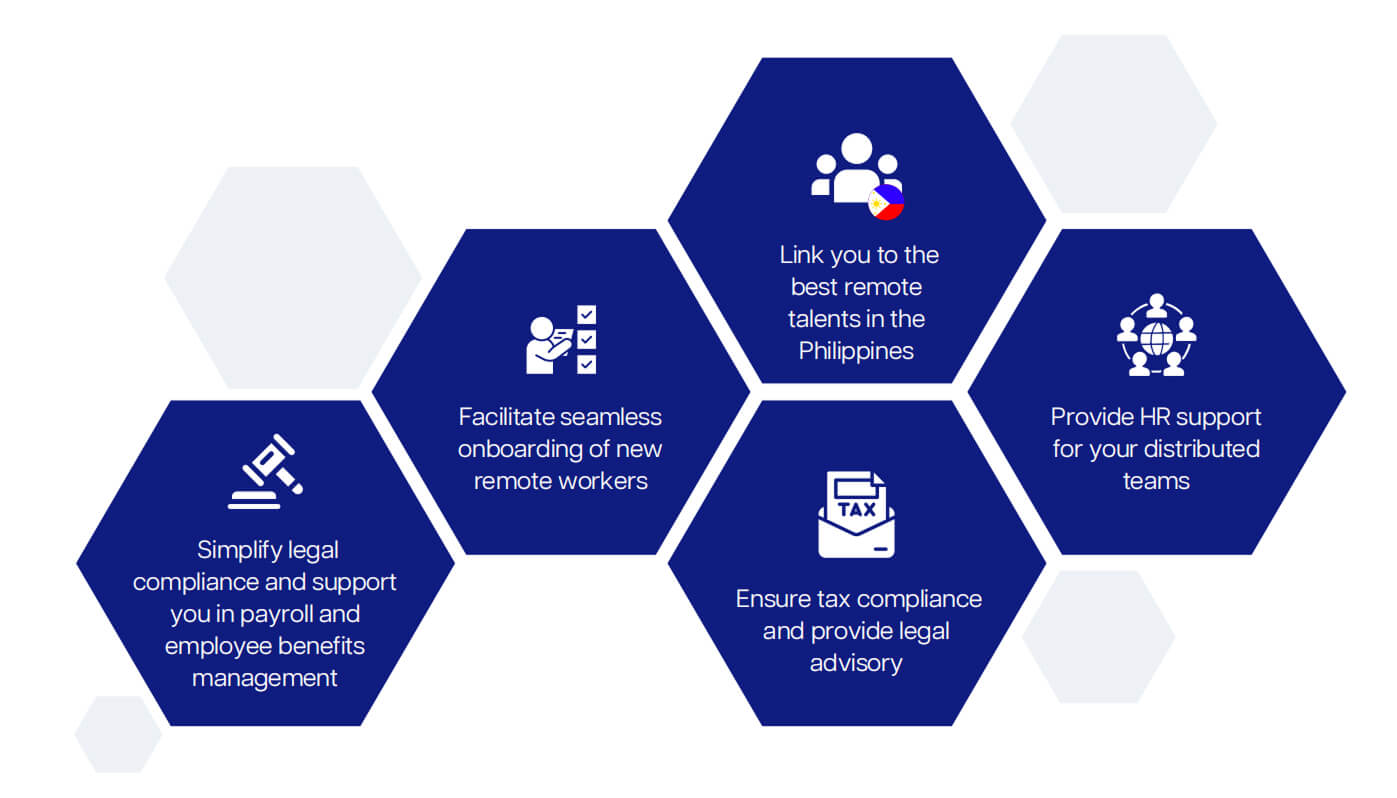
Some of the ways Remotify will empower your remote work journey are:
Ready to thrive in a remote-first work environment?